
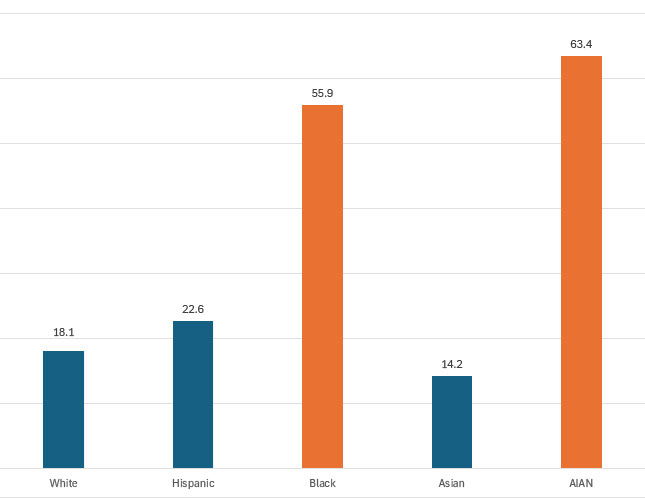
Black women in the U.S. continue to disproportionately suffer poor maternal outcomes that result in too many preventable deaths. Through increased awareness of some of the causes — lack of access to comprehensive prenatal care, systemic barriers and the need for more community-based support for pregnant and postpartum mothers — the work of decreasing the unacceptable Black maternal death rate has begun. Recognizing that Black women in pregnancy die at three times the rate of white women in this country is a major step toward finding solutions and saving lives.
 Awareness and mitigation of the problem are occurring at all levels: within healthcare systems, in government, within community-based organizations and through focused research in academic institutions across the country, including Maryland’s Preeminent Public Urban Research University, Morgan State.
On the national scale, the comprehensive legislation dubbed the Black Maternal Health Momnibus Act is enabling the medical community to implement data collection and quality improvement programs within their hospitals and networks. The Act also includes a bill that provides funding for programs that will grow and diversify the maternal health clinical and non-clinical workforce, increasing the number and diversity of trained birth workers, including doulas, who provide emotional, physical and emotional support to families during pregnancy, childbirth and the postpartum period.
Pregnancy-Related Mortality per 100,000 Births by Race and Ethnicity, 2020
A Morgan Center, An HBCU Alliance
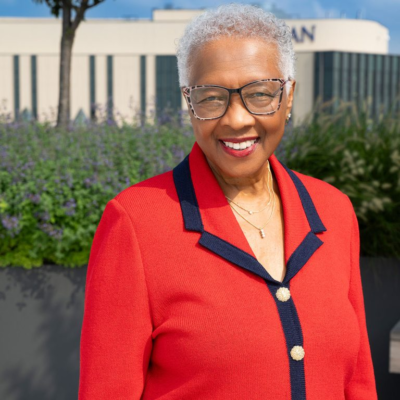
Yvonne Bronner, Sc.D., Professor in Morgan’s Department of Public and Allied Health
The building of any successful program starts with a passionate team and a visionary leader. Yvonne Bronner, Sc.D., professor in the Department of Public and Allied Health in Morgan’s School of Community Health and Policy (SCHP), and a veteran public health researcher in maternal and child health, conceived of an initiative to be the beacon for Black maternal health research led by a network of HBCUs. The HBCU Alliance Team for Maternal, Child and Family Health (HAT) was founded to address disparities in maternal, child and family health by contributing to innovation in training the 21st century workforce in these fields, with a focus on equity, diversity and inclusion at all levels; developing competent leaders; and increasing problem-solving research capacity of HBCUs and predominantly Black institutions.
Dr. Bronner, principal investigator of the MHRCC, collaborates with the 16 HRSA-funded research centers in Morgan’s maternal health initiative to increase their capacity to conduct high-quality, community-engaged research. MHRCC’s mentoring program staff are engaged in activities to support the professional development of MHRC faculty and students involved in the research. Dr. Bronner is very proud, for example, that several of the research centers have taken up the work of examining the role of doulas in solving the maternal health crisis, among them Morgan’s own Center for Maternal and Family Health (CMAFH).
“This is community-driven, will provide family stability and (will) lead to a new workforce,” she states.
Morgan has also collaborated with the Black Women’s Health Imperative, a national nonprofit organization dedicated to achieving health equity for Black women in the United States, to pilot the N.O.U.R.I.S.H. program — New Opportunity to Uncover our Resources, Intuition, Spirit and Healing — in which 40 Morgan State students completed a 12-month comprehensive doula training program. In addition, a Doula BRIDGE Program (Building Resources for Improving Doula Growth and Excellence), slated to begin soon, will provide comprehensive support to ensure that the research done with the HRSA funds is impactful to the community. The Bridge Program includes Cultural Humility and Trauma-Informed Care Training, Burnout Prevention and Well-Being Support, and Medicaid Enrollment training, with technical assistance and mentorship to support community-based doulas in Maryland.
With the creation of the HAT, MHRC, CMAFH and the MHRCC, public health experts from underrepresented groups are leading research on Black maternal health and are collaborating extensively in an unprecedented way. Only two years since its launch, MHRC already has 10 manuscripts in progress. In June 2024 and 2025, all 16 of the institutions funded by Morgan’s HRSA grants convened on the University’s campus to amplify their research work and exchange ideas through informative panels and workshops.
Encouraging Service and Learning
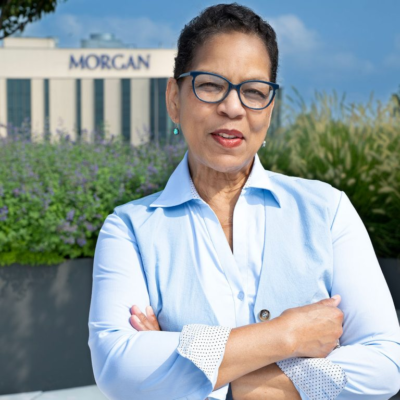
Kim Dobson Sydnor, Ph.D., Dean of Morgan’s School of Community Health and Policy
Kim Dobson Sydnor, Ph.D., dean of Morgan’s School of Community Health and Policy, led the charge for the establishment of the Center for Urban Health Equity (CUHE) at Morgan State in 2019. The CUHE strategically positioned Morgan to become the host HBCU for the large HRSA maternal health grants obtained by the University, she explains, furthering Morgan’s work of researching and addressing the Black maternal health crisis for the State of Maryland.
“(Our Center for Urban Health Equity) can prioritize Black maternal health by funding multiple research programs, supporting esteemed researchers and giving students from across the University an opportunity to engage in learning opportunities about Black maternal health,” says Dean Sydnor, who has worked hard to support the Maternal Health Research Center and the many bold initiatives in health equity launched by Morgan over the last five years.
Dr. Sydnor is particularly proud of the enrollment of Morgan students in N.O.U.R.I.S.H., the pilot doula-training program, which is funded by the Kellogg Foundation and was developed by Kanika Harris, Ph.D., who was then director of Maternal Child Health Programs at the Black Women’s Health Imperative. N.O.U.R.I.S.H. was the first program of its kind at an HBCU. Morgan senior Nevaeh Christy, a Health Education major with a focus in Community Health, completed her doula training through this program. Fueled with a passion for maternal health and advocacy, she acquired her first community doula job with the Mae organization while completing her studies at Morgan. Christy serves only two mothers at a time, a caseload that allows her to focus on her clients’ questions and concerns while she manages her studies.
“I had one mother who did not have any support in the delivery room,” Christy recalls. “This can be hard, because you are their only source of support.” After delivery, she explains, “I do check on my moms, but I have not had any of them request postpartum doula support.” But as a full-service doula, she knows that moms continue to need support when they return home.
Christy says her experiences with N.O.U.R.I.S.H. — interacting with expectant moms at hospital maternity wards at Johns Hopkins, Franklin Square, Mercy and the University of Maryland — have sparked her aspiration to become a nurse midwife and earn a doctorate in public health.
(Our Center for Urban Health Equity) can prioritize Black maternal health by funding multiple research programs, supporting esteemed researchers and giving students from across the University an opportunity to engage in learning opportunities about Black maternal health
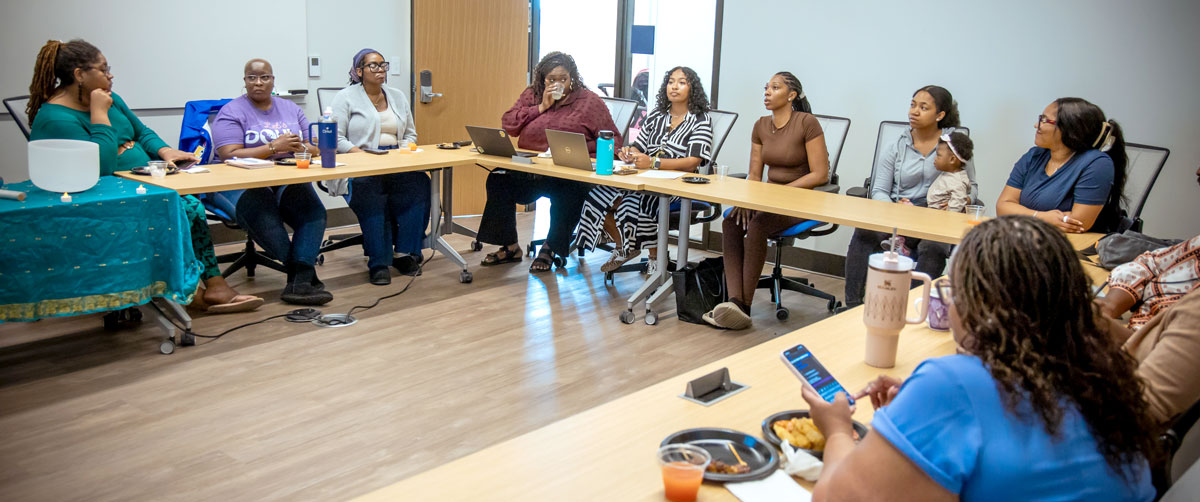
Beacon and Bridge
Morgan’s receipt of the HRSA grants to address the maternal health crisis solidified its role as the leading HBCU doing critical research in maternal child health.
Kesha Baptiste-Roberts, Ph.D., Associate Professor and Chair of Public and Allied Health at Morgan
In creating the HBCU Alliance Team and leading the HRSA-funded Maternal Health Research Coordinating Center (MHRCC), Dr. Yvonne Bronner is keeping Morgan at the very forefront of maternal and child health improvement in our communities. The value of the MHRC, the MHRCC and the CMAFH comes from their building of capacity for research to develop community-informed, evidence-based solutions. Holding true to this value, the MHRCC collaborates with multiple HBCUs and with Hispanic Serving Institutions that serve Black and other minority populations, to amplify the research and community programs being conducted by universities that often lack funding and staffing. The MHRCC at Morgan serves as a lighthouse for all the other institutions to navigate toward for guidance in research mentorship, expert advice on data collection, and community-focused programs like the MSU-CMAFH doula workforce training support that Morgan has spearheaded.
Doula programs across the United States continue to proliferate, as the preliminary research from Morgan State University’s School of Community Health and Policy illuminates the fact that Black women need more support in their maternal experience. In Dr. Marilyn Berchie-Gialamas’ words, “Moms need a bridge.” And Morgan is building that bridge toward birth
MHRC Research Locations
MHRC consists of 16 Research Centers (RCs) and a Coordinating Center (CC), located where maternal health problems are more severe. These centers will encourage and support research, education, community engagement and collaborative partnership to positively address disparities in maternal health outcomes.

ALABAMA
Tuskegee University
Tuskegee, AL
CALIFORNIA
Loma Linda University
Loma Linda, CA
DISTRICT OF COLUMBIA
Howard University
FLORIDA
Albizu University
Miami, FL
Florida International University
Miami, FL
GEORGIA
Morehouse School of Medicine
Atlanta, GA
HAWAII
University of Hawaii
Honolulu, HI
MARYLAND
Morgan State University
Baltimore, MD
MISSISSIPPI
Tougaloo College
Jackson, MS
OHIO
Ohio State University
Columbus, OH
PUERTO RICO
Albizu University
San Juan, PR
TENNESSEE
Meharry Medical College School of Graduate Studies
Nashville, TN
Meharry Medical College School of Applied Computational Science
Nashville, TN
Tennessee State University
Nashville, TN
TEXAS
Texas A&M University
College Station, TX
Texas Southern University
Houston, TX
The University of Texas at Arlington
Arlington, TX
The University of Texas Rio Grande Valley Edinburg, TX
Expanding the Focus
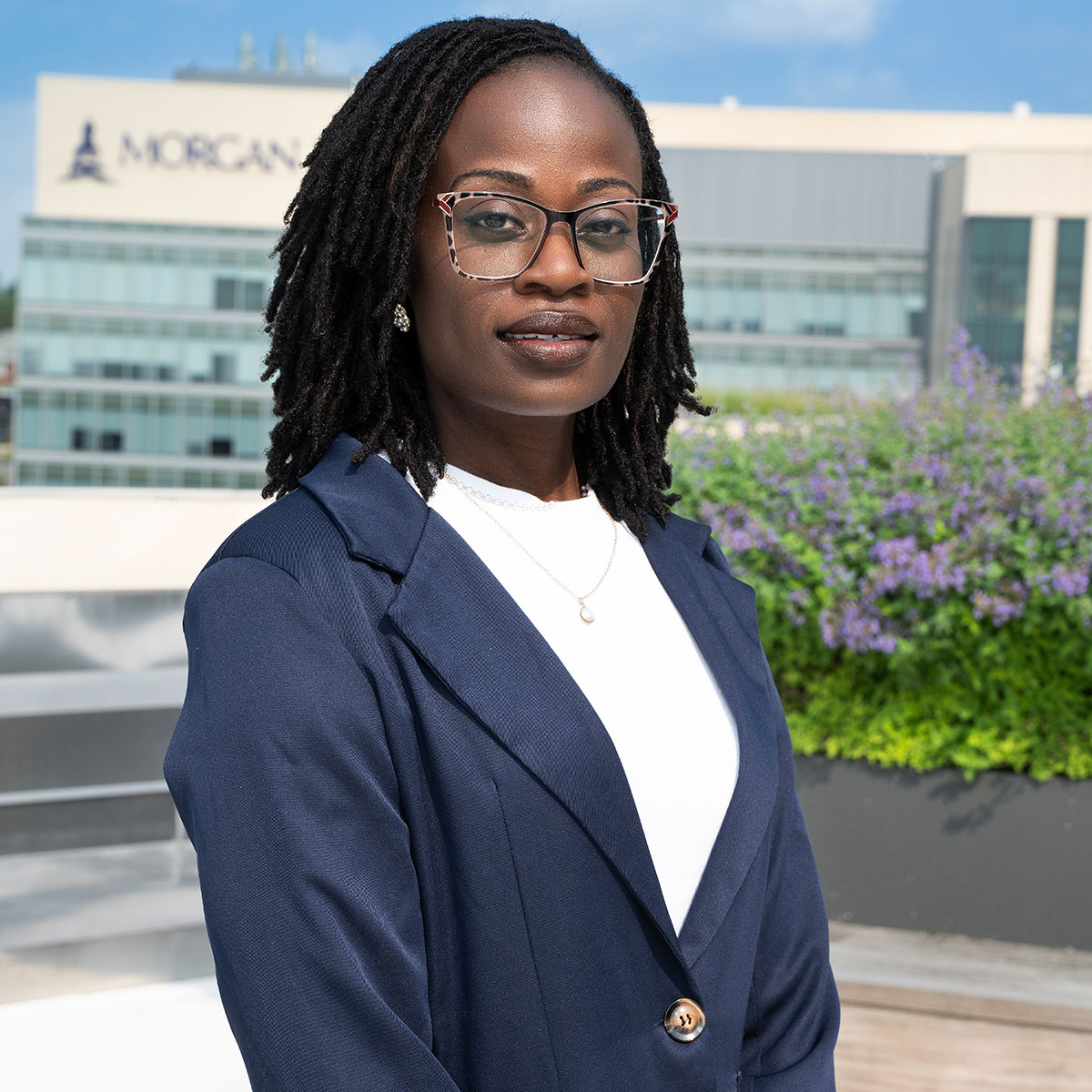
Marilyn Berchie-Gialamas, D.N.P., Assistant Professor of Nursing at Morgan
“The effectiveness of doulas in helping to improve maternal outcomes through improved advocacy for expectant moms and assistance during the peripartum period is well documented,” states Assistant Professor of Nursing Marilyn Berchie-Gialamas, D.N.P., who has a deep commitment to women and holistic maternal health. In addition to her co-principal investigator role for the Center for Maternal and Family Health HRSA research center grant, Dr. Berchie-Gialamas leads her own Centers for Medicare and Medicaid Services-funded research, examining factors that are facilitators of, or barriers to, the use of doula care. Based on data from expectant moms, her research uncovered that mothers in Baltimore City find challenges in three key areas: finding a community doula; lack of knowledge about doulas; and finding a doula who accepts Medicaid. In the focus groups with community doulas, barriers reported included low pay for the amount of time invested with the moms, especially moms with multiple health and social issues; burnout within the first year of work; and the need for career support.
This foundational work, in addition to the community needs assessment completed by the CMAFH, informed the development of the CMAFH’s Doula BRIDGE Program. The program’s goal is to increase the number of community-based, Medicaid-certified doulas in Baltimore City as well as support their work. Dr. Berchie-Gialamas’ team will help 25 community doula-trained women achieve Medicaid certification and will hold workshops for the women about how to submit documentation for pay reimbursement, connect them with larger doula organizations and support them with burnout prevention and mentoring. This novel program is part of the capacity-building research that Dr. Bronner believes in so passionately.
Looking beyond the foundational information gathered about doula training and moms who use doulas, Dr. Kesha Baptiste-Roberts, associate professor and chair of Public and Allied Health at Morgan and Principal Investigator of the CMAFH, states, “The next area of focus for maternal outcomes research is developing innovative approaches to enhance preconception health.”
As an epidemiologist, Dr. Baptiste-Roberts sees preconception care as misunderstood, fragmented and underutilized, particularly in underserved communities.
“A holistic approach involving the integration of digital tools and ‘precision public health’ is needed,” she says. “It is important to think outside of the box and bridge population-level strategies with individual-level tailoring, and also engage both males and females in targeted interventions.”
Written by: By: Kendra Outler, M.D.